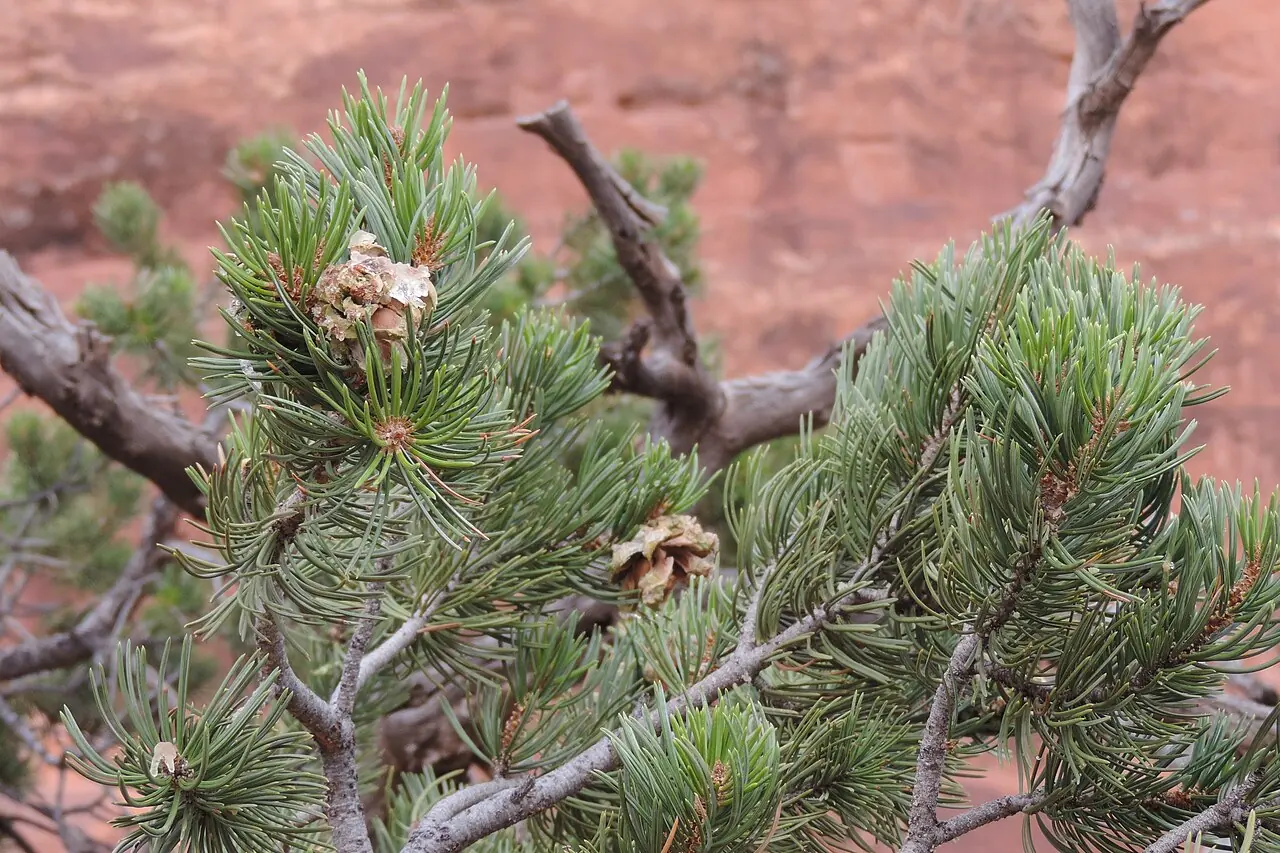
File photo: Pinyon pine needles and cones in Arches National Park (2016-09-07 23:38:35). Photo: Krzysztof Ziarnek, Kenraiz · CC BY-SA 4.0 · Wikimedia Commons
Everything Utah, every day.
Help Utahns understand their communities and hold government accountable. Our mission →
A drought-tolerant evergreen with scale-covered twigs, fibrous bark, and berry-like cones that feed wildlife.
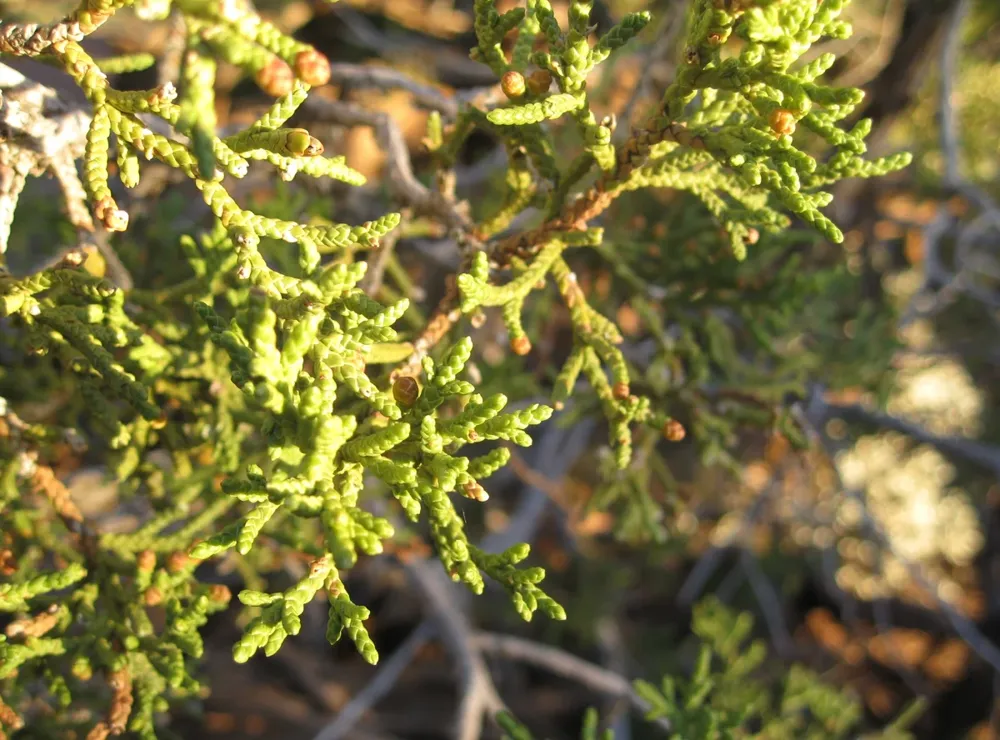
Utah juniper gives much of Utah's dry woodland its rounded, irregular silhouette. Its foliage consists mainly of tiny overlapping scales that cover the twigs, unlike the long needles grouped in bundles on nearby pinyon pines. Gray, fibrous bark breaks into strips. The tree is often low and branching, but its form changes with exposure and growing conditions. Compare foliage and bark rather than judging by shape alone: wind, drought, and age can produce very different outlines within the same species.
The round structures commonly called juniper berries are fleshy cones. Their appearance changes as they develop, and a pale waxy coating can alter the apparent color, so blue color by itself is not a reliable species test. Utah juniper is exceptionally tolerant of dry, rocky ground and occurs across much of the state at middle elevations. Arches National Park records it in desert-shrub, streamside, and pinyon-juniper communities. Evergreen foliage makes it recognizable outside the summer growing season, even when cones are scarce.
Junipers provide shelter as well as food. Birds and small mammals use the cones, particularly in the colder part of the year, and larger animals use the woodland for cover. A shaded patch beneath a tree is part of that habitat, not an invitation to clear branches or enlarge a campsite. View accessible foliage from a durable route and leave cones, bark, and deadwood where they lie.
Scale-like foliage, fibrous gray bark, rounded berry-like cones; compare with pinyon's bundled needles.
Do not peel bark, break branches, or clear shelter beneath the tree.
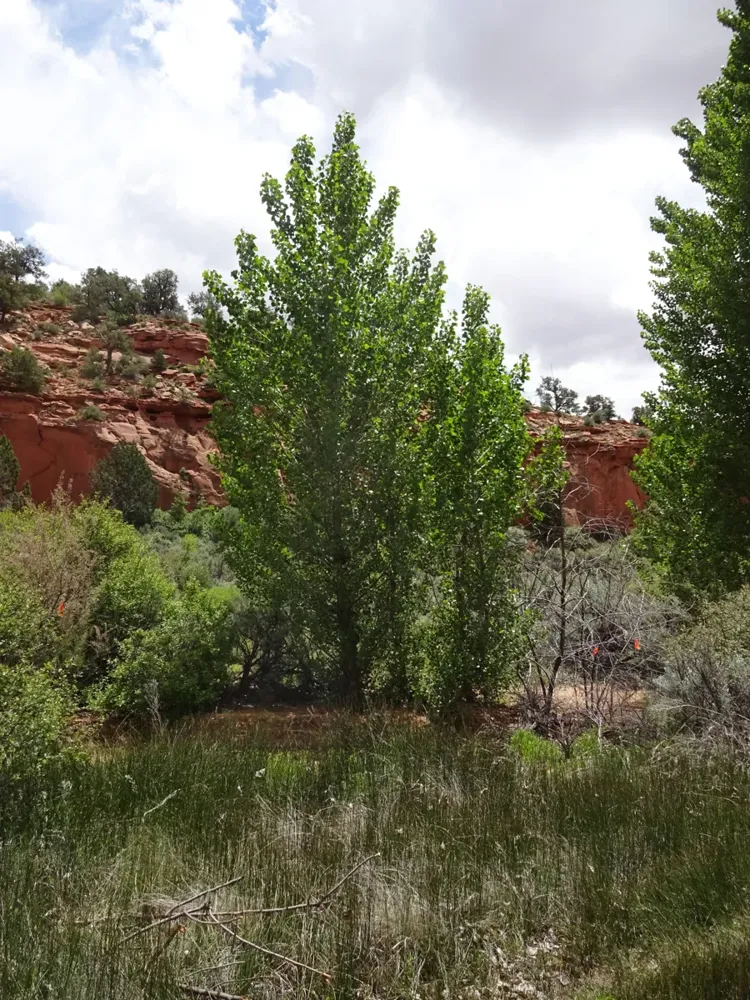
A broad-crowned river tree whose new generations depend on the right combination of flowing water, exposed sediment, and moisture.
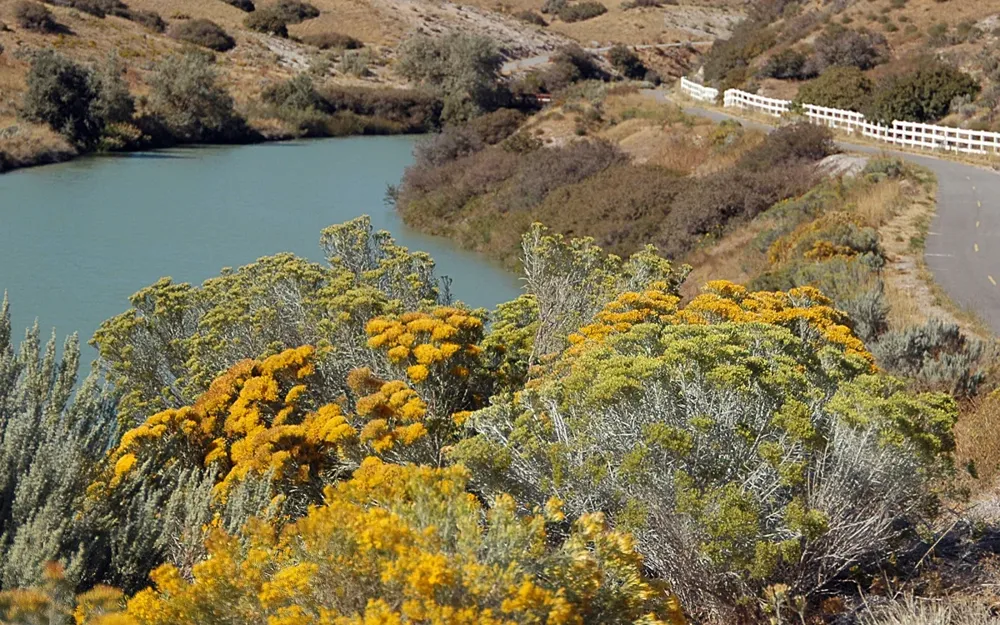
A flexible-stemmed native shrub whose late-season yellow flowers extend feeding opportunities for pollinators.
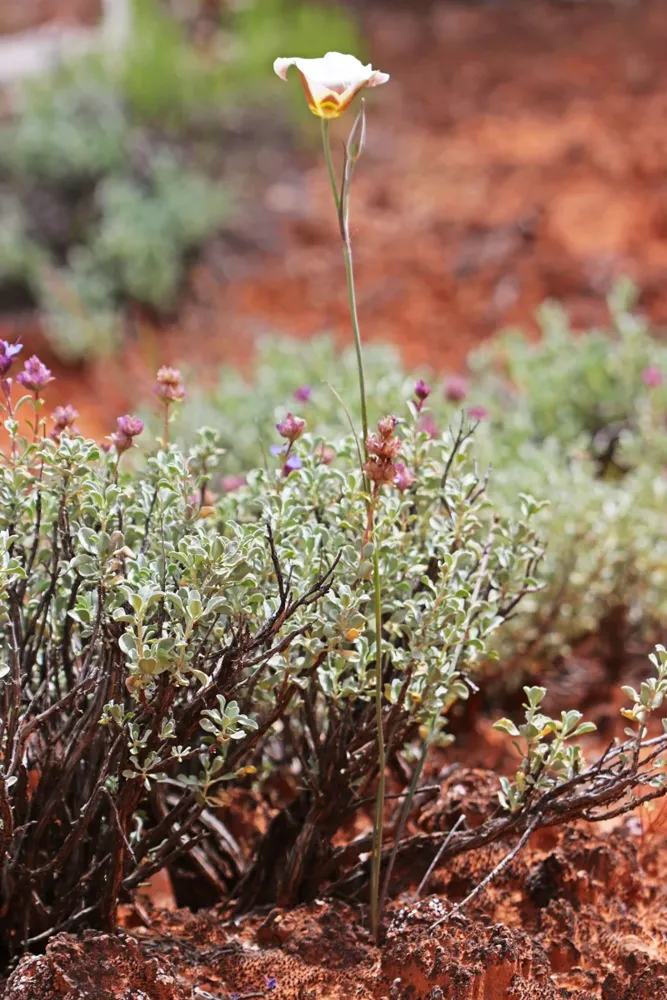
Utah's state flower briefly lifts a three-petaled cup above open, dry-country vegetation before its aboveground growth fades.