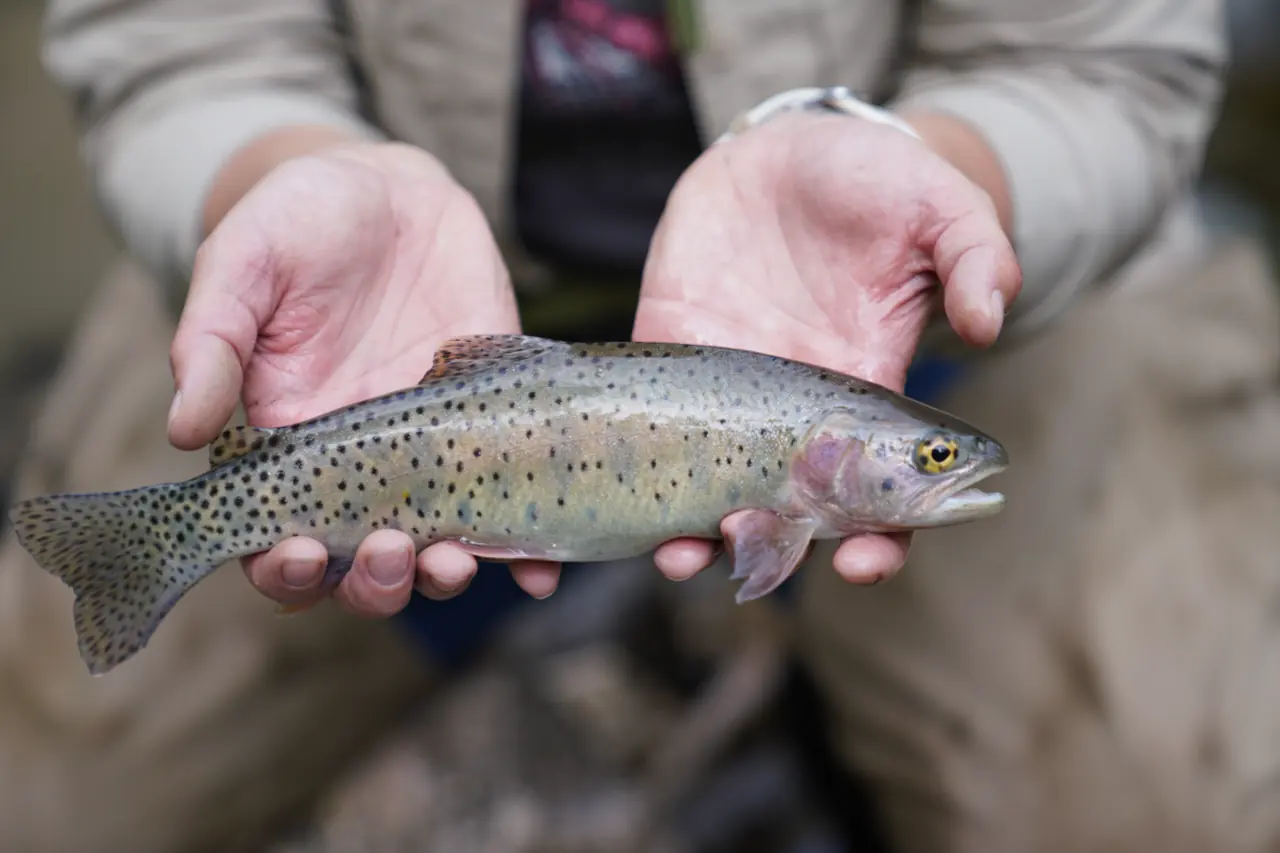
Cutthroat trout take their common name from the colored mark beneath the lower jaw, but that mark can be faint or absent. Spotting, body color and fin features also help with identification. In particular, Bear Lake fish can look less like the familiar brightly marked stream trout. A quick glance should not be used to certify a fish's ancestry or genetic purity. The four familiar Utah management names are Bear River, Bonneville, Colorado River and Yellowstone cutthroat, each with its own geographic history.
The contrast between native and introduced trout is important here. Cutthroat are Utah's native trout; brook, brown and rainbow trout were introduced. Those species can compete with cutthroat for food and habitat, and some prey on young fish. Rainbow trout can also interbreed with cutthroat. Habitat alteration compounds these pressures, so conserving a cutthroat population involves more than putting fish into a stream. The waterway and the other fish living in it both matter.
Restoration aims to preserve multiple populations and, where feasible, connections that allow fish to recolonize after a local disturbance. In other settings, barriers are used to keep nonnative fish out of a restored reach. That trade-off explains why superficially similar streams may receive different management. Read a restoration announcement as a project with a date, not a permanent promise of access or fishing opportunity. Current regulations and on-site closures must be checked separately before an outing.
Observe from stable banks, avoid disturbing shallow spawning habitat, never move fish between waters and check DWR's current rules before fishing.