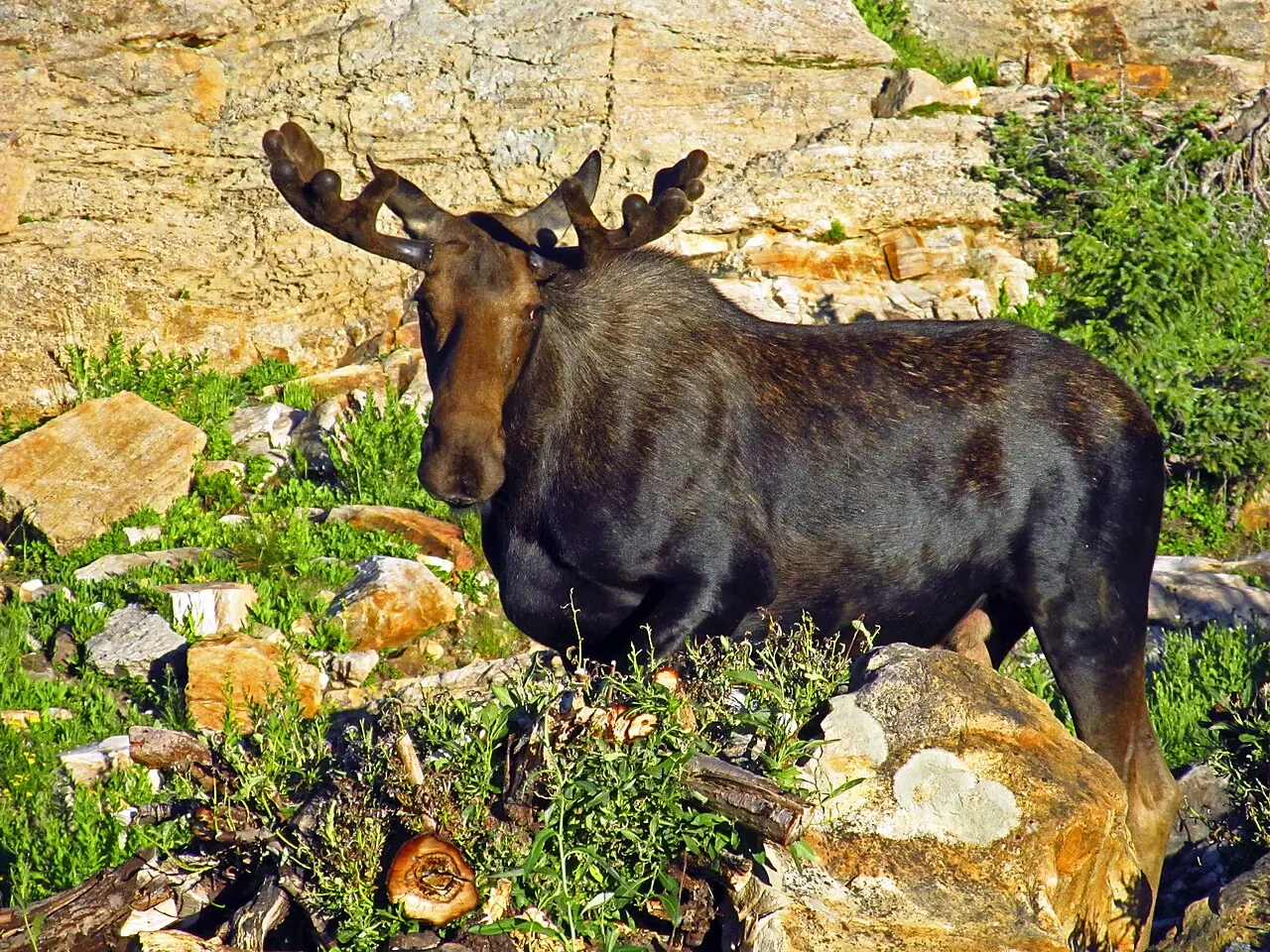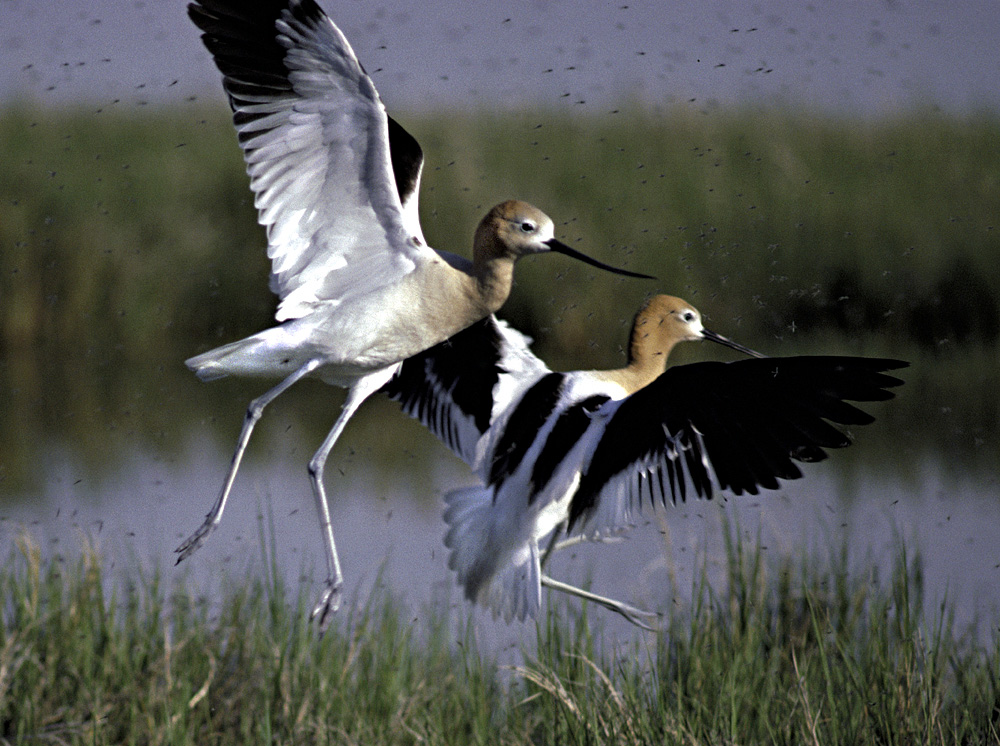
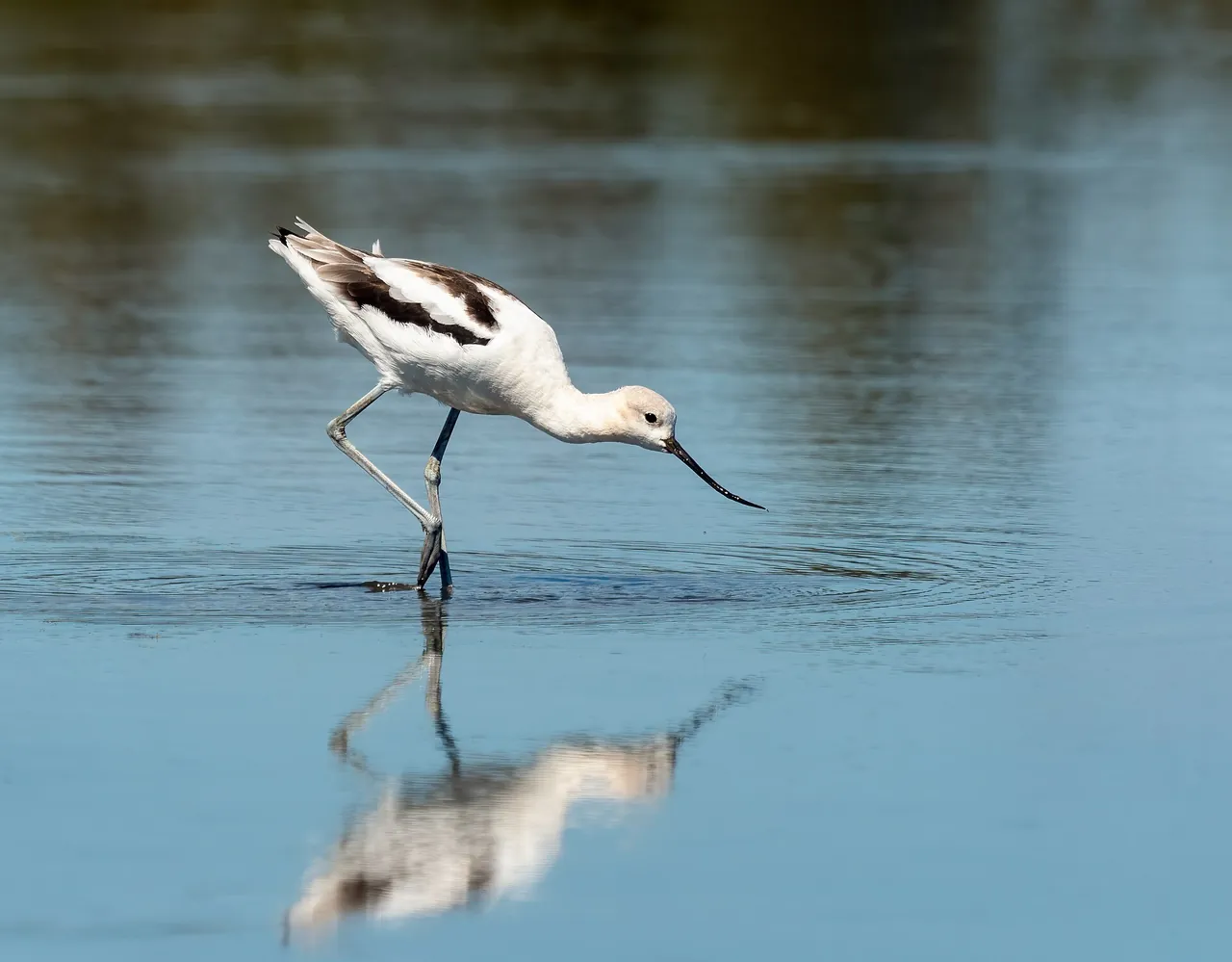
American avocet
An upturned bill, blue-gray legs and a sweeping feeding motion make this wetland shorebird especially distinctive.
Everything Utah, every day.
Help Utahns understand their communities and hold government accountable. Our mission →
Read the refuge as a changing set of habitats, from shallow feeding flats to marsh cover and deeper water.

Bear River Migratory Bird Refuge is more than one large pool of water. Its delta landscape includes fresh and brackish marshes, open water, mudflats and uplands. Water-control structures help managers provide different depths, because a shallow-feeding shorebird and a bird using deeper water do not need exactly the same conditions. The refuge's position near the Pacific and Central flyways makes that variety valuable to birds stopping to rest, birds refueling for another flight and birds remaining to nest.
One useful way to watch is to compare places before comparing species. Look at the transition from exposed ground to shallow water, then at open pools and emergent vegetation. In the wider Great Salt Lake system, salinity, freshwater inflow and distance from shore all influence which food and shelter are available. The result is a connected habitat network rather than an interchangeable collection of ponds. A bird may use more than one part of that network to meet its needs.
The cast changes through the year: spring passage gives way to nesting and then returning migrants, with winter visitors using available habitat later on. A calendar is a starting point, not a live inventory. Water conditions and management can change the view from one visit to the next. Try spending time with a small area instead of rushing to collect names; feeding method, flock spacing and the habitat a bird chooses can be as informative as a checklist total.
A community of birds rather than one species. Use bill shape, leg length, feeding behavior and habitat together, then look at the species profiles.
Refuge management aims to sustain feeding, resting and nesting habitat; water depth and habitat diversity are central.
Follow signed routes and closures, keep clear of nesting habitat and avoid making birds move for a closer look.

An upturned bill, blue-gray legs and a sweeping feeding motion make this wetland shorebird especially distinctive.

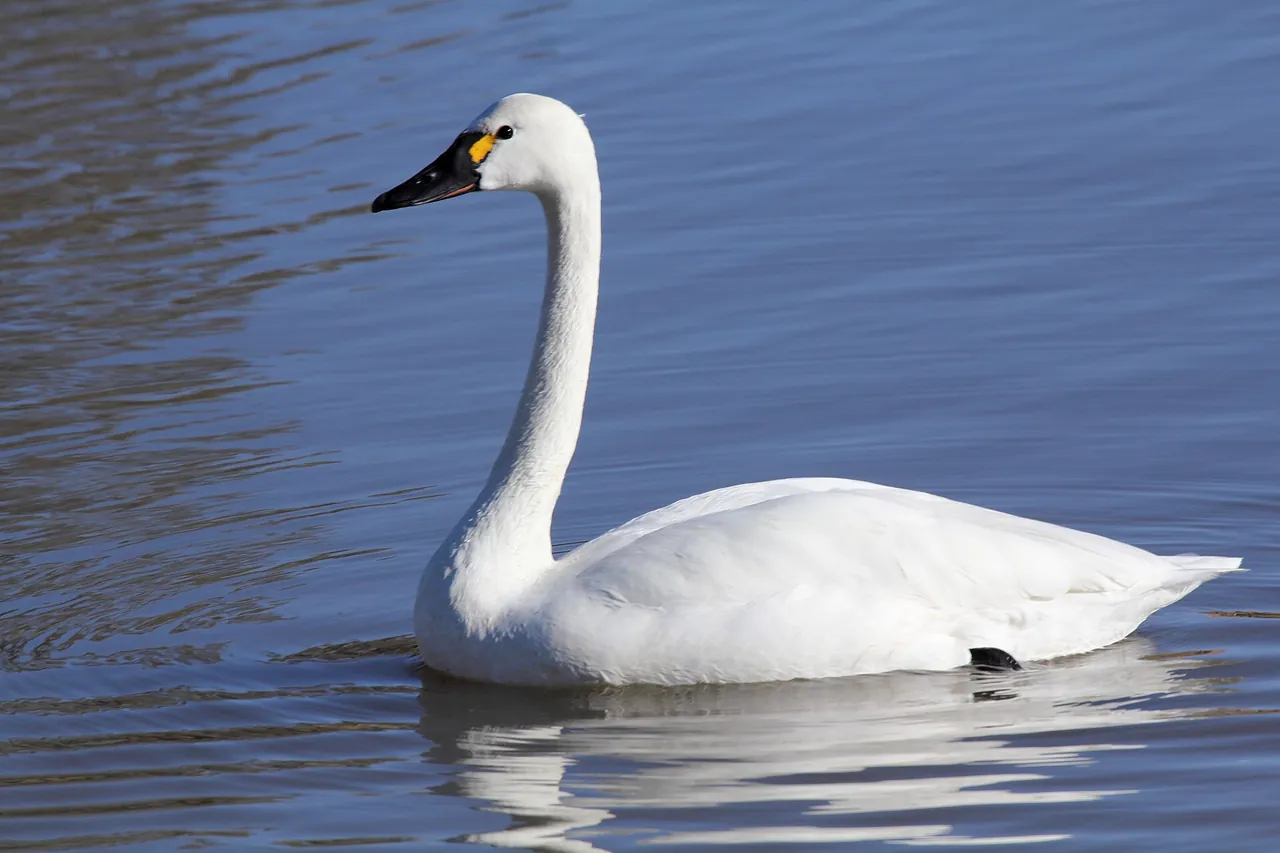
A large white migrant whose family groups link Utah's wetlands with Arctic nesting country.

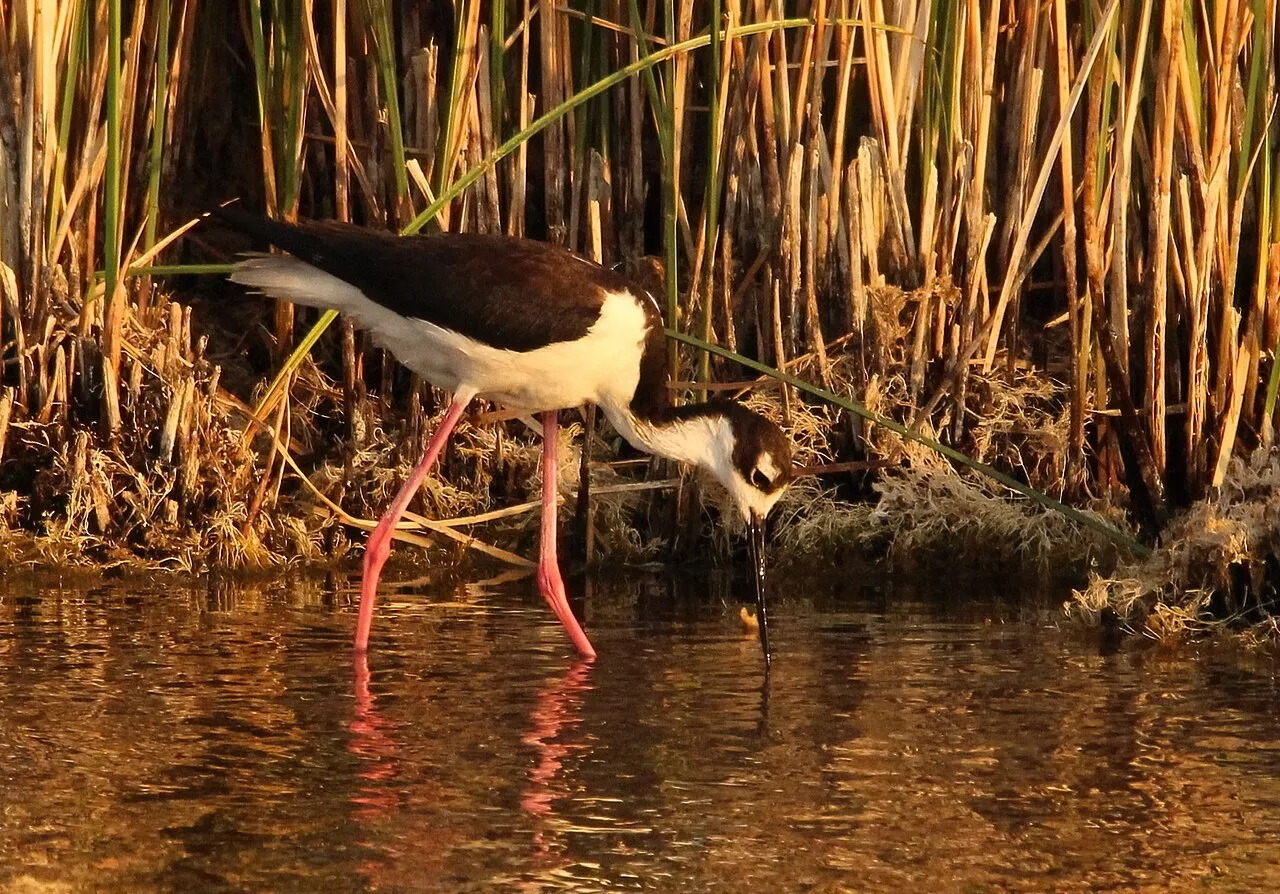
Pink legs and a straight, needlelike bill distinguish this black-and-white wader from its avocet neighbors.

The largest member of the deer family in Utah, at home where northern mountain forest meets water.