Published by Paul Ivinskas
Saturday, October 24, 2026

Everything Utah, every day.

Help Utahns understand their communities and hold government accountable. Our mission →

Wildlife & plants · Trees

Quaking aspen

Utah's state tree forms bright mountain groves whose separate trunks can share an underground root system.

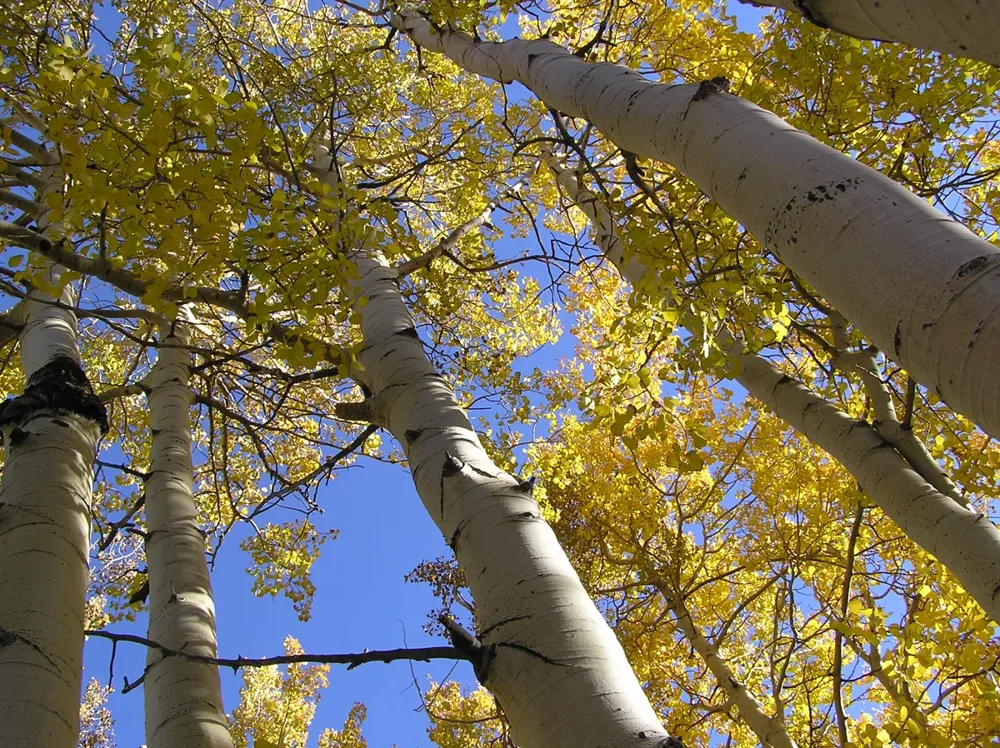
White quaking aspen trunks beneath yellow autumn leaves
File photo: White quaking aspen trunks beneath yellow autumn leaves — Little Cottonwood Canyon, September 2005 · Cropped to fit. Photo: Scott Catron · CC BY-SA 3.0 · Wikimedia Commons

An aspen grove moves even in a light breeze. The nearly round leaves hang from flattened stalks that let them flutter, making the canopy shimmer and rustle. Smooth, pale bark is another useful clue, although older trunks can become dark and furrowed near their bases. The leaves turn yellow to orange before falling. These visible features are more dependable than a promised autumn date: elevation, weather, and the condition of a particular grove all influence the display. Utah's state tree is most at home in cool, moist mountain settings.

What looks like a stand of separate trees may be a connected clone. Aspen can send up new stems from an established root system, especially after disturbance opens the canopy. The individual trunks and the larger genetic individual therefore have different life histories. Root sprouting does not mean every neighboring aspen belongs to one clone, and a visitor cannot establish clone boundaries simply by comparing bark or fall color. Aspen needs abundant light; its response to disturbance is part of the story of a grove, rather than proof that every stand needs the same treatment.

Aspen forests offer feeding, resting, and breeding habitat to birds and mammals. Young shoots are browse for deer and elk, but repeated heavy browsing can prevent replacement stems from growing tall. Enjoy both the canopy and its understory from established routes, and leave bark uncarved and young shoots intact.
How to recognize it

Rounded, finely toothed leaves on flattened stalks; pale smooth bark on younger trunks. Use several features together.

Seeing it

Stay on established routes, avoid trampling sprouts, and never carve bark.

Related profiles

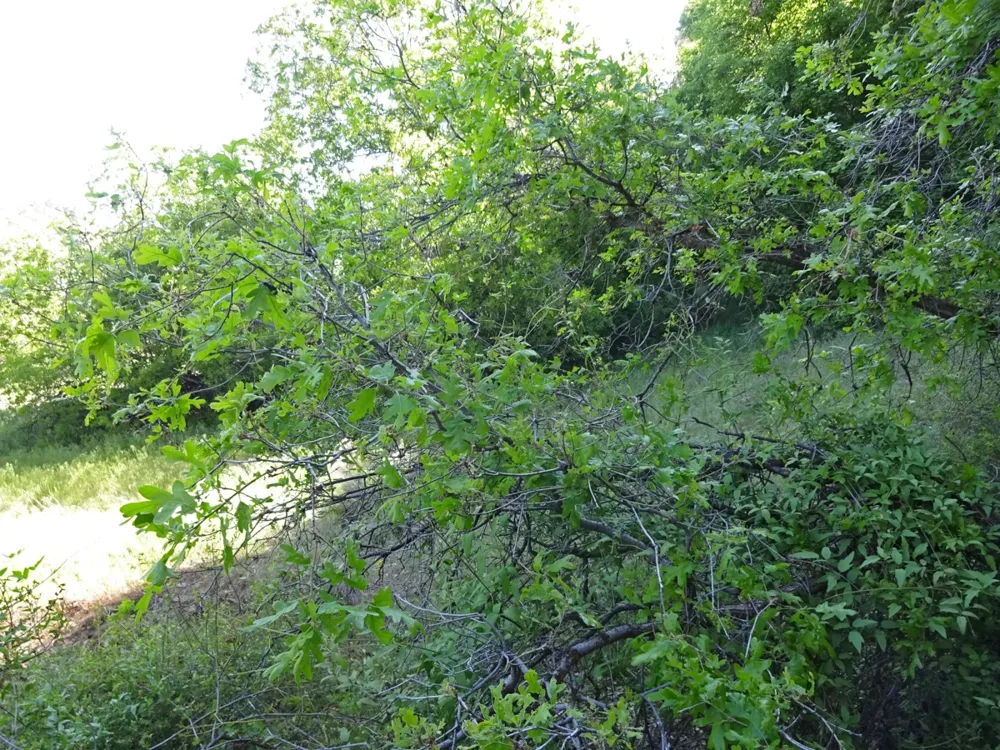
Leafy Gambel oak branches in a canyon
File photo: Leafy Gambel oak branches in a canyon — Johnson Lakes Canyon, Kane County, May 2016. Photo: Andrey Zharkikh from Salt Lake City, USA · CC BY 2.0 · Wikimedia Commons
Trees

Gambel oak

A thicket-forming native oak that links Utah's foothills with mountain woodlands and provides important wildlife food and cover.

Quercus gambelii

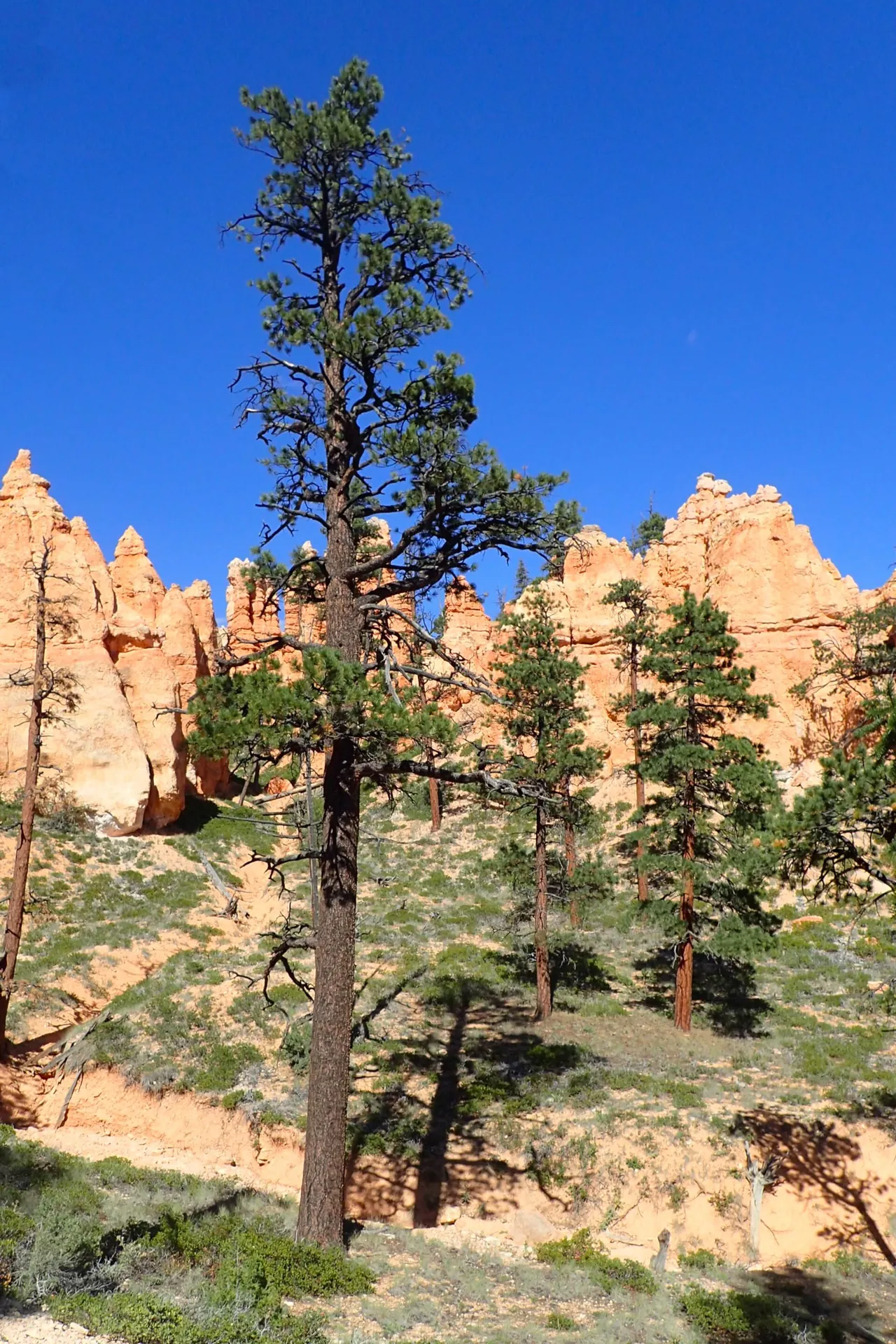
A limber pine growing among red rock hoodoos on Bryce Canyon's Navajo Loop Trail
File photo: a limber pine growing among red rock hoodoos on Bryce Canyon's Navajo Loop Trail. Photo: Krzysztof Ziarnek, Kenraiz · CC BY-SA 4.0 · Wikimedia Commons
Trees

Limber pine

A slow-growing native pine of harsh mountain sites, with five needles in each bundle.

Pinus flexilis

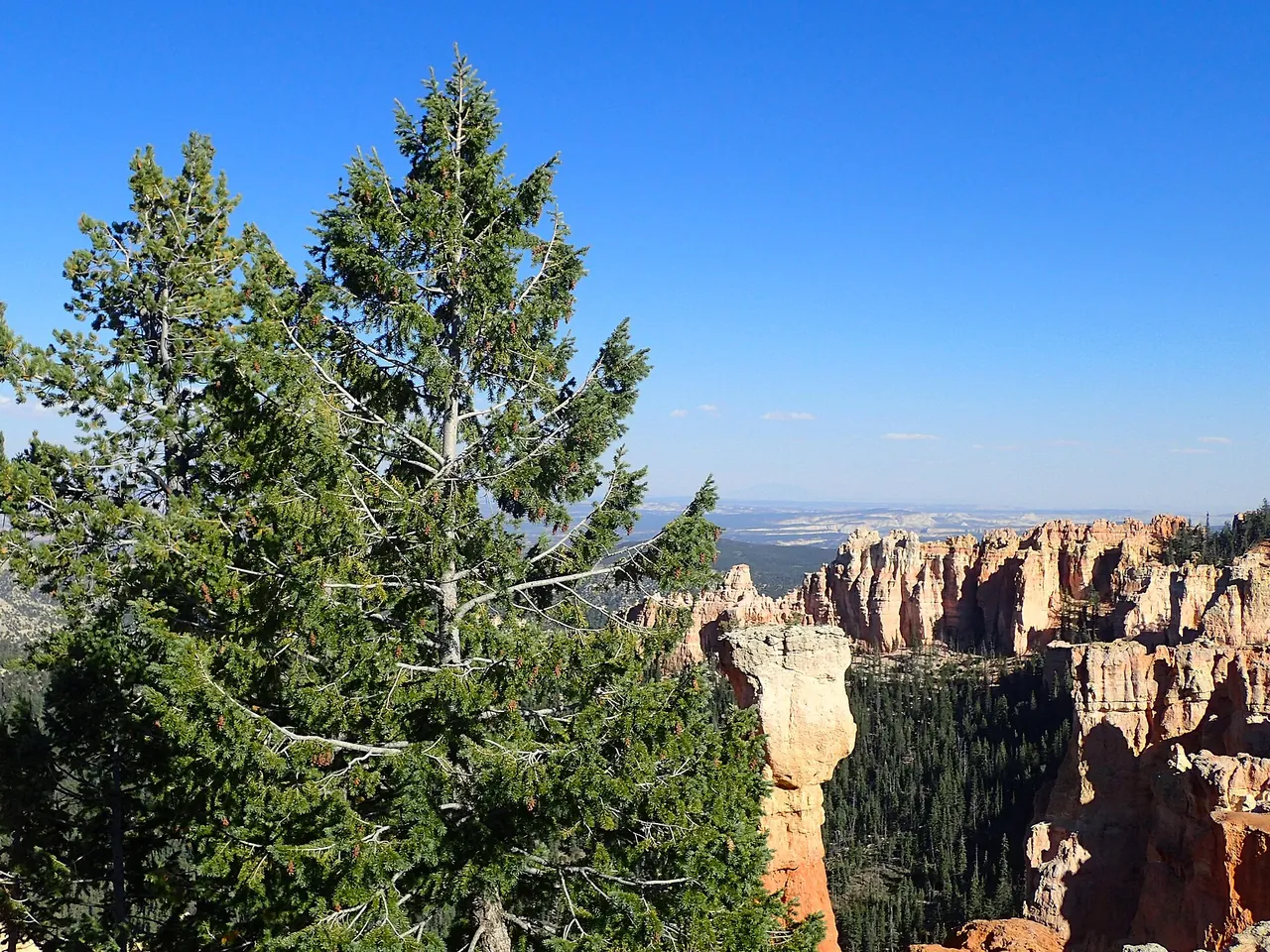
A Douglas-fir beside red rock hoodoos in Agua Canyon, Bryce Canyon National Park
File photo: a Douglas-fir beside red rock hoodoos in Agua Canyon, Bryce Canyon National Park. Photo: Krzysztof Ziarnek, Kenraiz · CC BY-SA 4.0 · Wikimedia Commons
Trees

Douglas-fir

A native mountain conifer whose hanging cones have distinctive three-pointed bracts.

Pseudotsuga menziesii

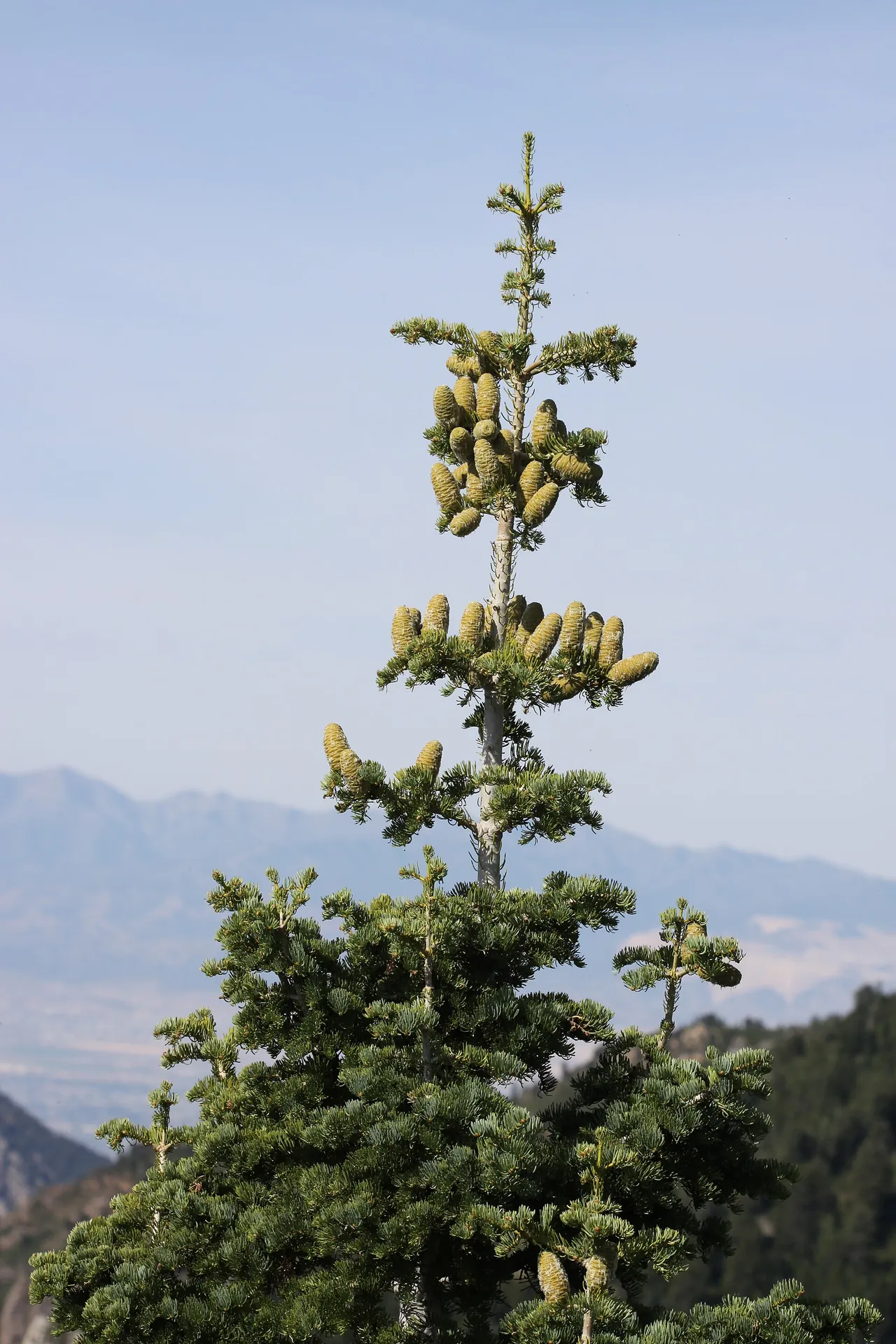
The crown of a white fir in Big Cottonwood Canyon
File photo: the crown of a white fir in Big Cottonwood Canyon. Photo: Andrey Zharkikh · CC BY 2.0 · Wikimedia Commons
Trees

White fir

Also called concolor fir, a native tree with long, flat needles and upright cones.

Abies concolor

Saved on this device. Statewide news and alerts remain available.